An Anion Gap Calculator helps practitioners, students, and knowledgeable readers work out and understand the anion gap from standard serum electrolytes. The value is a helpful screening tool for acid-base problems, especially when evaluating metabolic acidosis. Because albumin is a key contributor to unmeasured negative charge in the blood, the raw anion gap can be deceptive in hypoalbuminemia. That is why an albumin-corrected anion gap is often more clinically useful than the measured value alone.
This article describes what the anion gap measures, how the anion gap formula functions, how to make the albumin adjustment, and how to interpret the result for clinical interpretation. The Discover more goal is to move from a measured number to a more accurate view of acid-base status and the underlying cause of an abnormal result.
What the anion gap indicates
The anion gap is a computed result based on serum electrolytes. It evaluates the main reported cations and anions in the blood, most commonly sodium, chloride, and bicarbonate. The calculation reflects the difference between positively charged particles that are measured and measured negatively charged particles, while also indirectly reflecting unmeasured ions.
In basic terms, the anion gap helps reveal whether there are excess acids or other unmeasured substances in the bloodstream. That makes it especially useful when evaluating acid-base disorders and determining whether a patient has metabolic acidosis. A normal result does not always eliminate pathology, but an abnormal result often indicates a specific diagnostic path.
The standard calculation is based on common chemistry values from an electrolyte panel. Because sodium is typically the main measured cation and chloride plus bicarbonate are the main measured anions, the difference between them provides a clinically meaningful clue about the balance of electrolytes and the presence of unmeasured anions.
Commonly, the anion gap is used as a diagnostic aid rather than a stand-alone diagnosis. The number must be interpreted in combination with symptoms, blood gas data, and the broader laboratory picture.
Why albumin alters the anion gap
Albumin is the key unmeasured anion in plasma. Its protein charge has a strong effect on the normal anion gap. When albumin is low, fewer negatively charged proteins are present in the blood, so the measured anion gap can appear smaller than anticipated even when acid-base pathology is present.
This is important because hypoalbuminemia can conceal a true increase in unmeasured acids. A patient may have major metabolic derangement, but the measured gap looks only a little increased or even normal. In that setting, albumin correction improves clinical significance and makes the result more precise for clinical interpretation.
Albumin is also essential for maintaining acid-base balance. Since it carries negative charge, changes in albumin concentration shift the difference between measured cations and anions. If albumin drops, the expected range of the anion gap shifts downward. That is why a raw value should not be considered in isolation when serum albumin is abnormal.
In practical terms, low albumin can obscure a higher-than-expected acid burden. Correcting the anion gap helps clinicians identify an abnormal result that might otherwise be dismissed as normal.
How to work out the albumin-corrected anion gap
The anion gap formula commonly used is:
Anion gap = Sodium - (Chloride + Bicarbonate)
Once the value is calculated, the corrected anion gap can be estimated by accounting for albumin. A widely used albumin adjustment adds about 2.5 mEq/L to the measured anion gap for every 1 g/dL drop in albumin below 4.0 g/dL. In other words, lower albumin means the corrected value rises to better reflect the true acid burden.
A practical correction is written as follows:
Corrected anion gap = Measured anion gap + 2.5 × (4.0 - albumin in g/dL)
This adjustment offers a more realistic expected range for patients with low albumin. It is not a perfect law, but it is a well-accepted clinical estimate that enhances interpretation. The goal is to match the measured value with a corrected value rather than rely on the raw number alone.
The concept of normal range can change by laboratory because of differences in analyzer methods and reference intervals. Even so, albumin correction helps guide evaluation when the albumin level is clearly below normal. That is especially useful in hospitalized patients, where the raw anion gap may downplay the true degree of metabolic disturbance.
Remember that the albumin-corrected anion gap is a calculated estimate, not a direct measurement. It should assist, not replace, the overall evaluation.
How to operate an Anion Gap Calculator
An Anion Gap Calculator is a handy way to calculate both the observed and revised gap from standard lab values. Most calculators request sodium, chloride, bicarbonate, and albumin. Certain calculators also allow the user to add the local reference range so the result can be compared against the lab’s own standards.
A basic step-by-step calculation usually takes this sequence:
- Enter the sodium value from the serum labs. Input the chloride value. Enter the bicarbonate value. Add the albumin value if correction is needed. Work out the measured anion gap. Apply the albumin adjustment to derive the corrected anion gap. Check the result with the lab’s reference range and the clinical picture.
For example, if sodium is 140, chloride is 104, bicarbonate is 20, and albumin is 2.0 g/dL, the measured anion gap is 16. The albumin-corrected anion gap is greater than the measured value because hypoalbuminemia lowers the uncorrected result. In that case, the calculator helps reveal a more significant acid-base abnormality than the raw number suggests.
For this reason calculator use is more than a convenience. It functions as a screening tool that helps clinicians quickly identify whether the measured value matches the expected range. If not, the discrepancy can prompt further evaluation.
The best use of the calculator is stepwise: calculate the gap, correct it when albumin is low, and then review the result within the full acid-base context. If needed, confirm the findings with blood gas analysis, lactate, ketones, renal studies, or toxicology testing.
Reading high, normal, and low anion gap results
A elevated anion gap indicates an increase of unmeasured anions, often due to acids. This result is classically associated with high anion gap metabolic acidosis. When the gap is elevated, the clinician should consider whether the result reflects lactate accumulation, rising ketones, kidney dysfunction, or toxic ingestion.
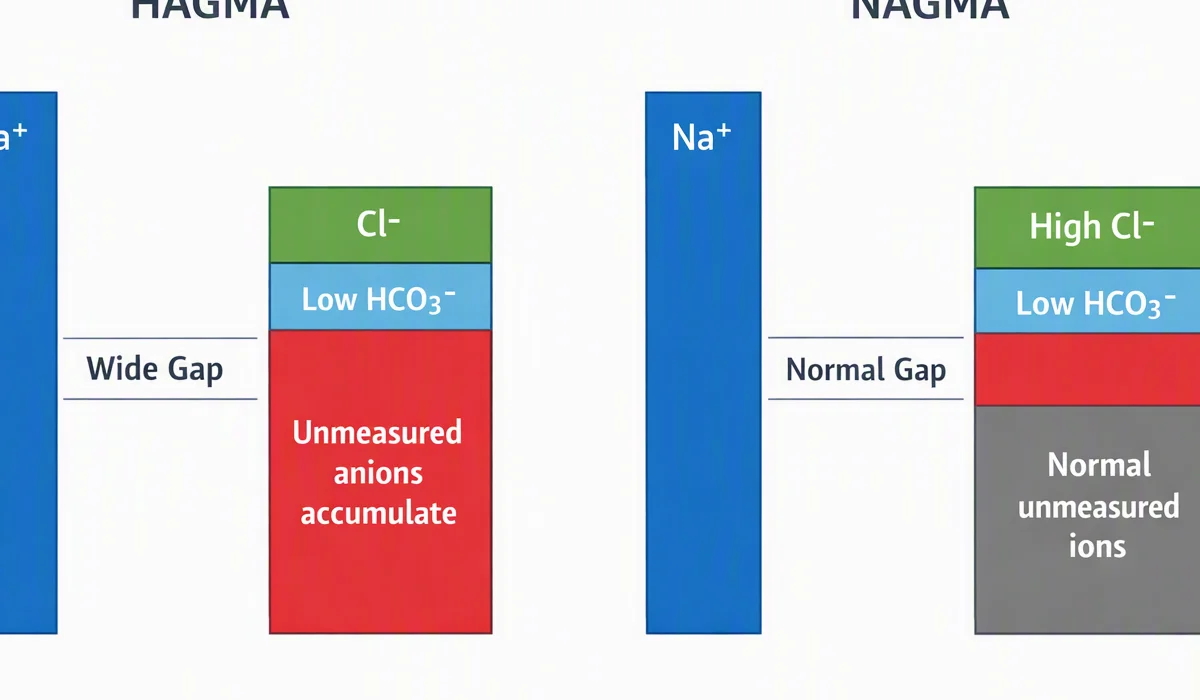
A normal anion gap does not always mean there is no metabolic problem. It can occur in normal anion gap metabolic acidosis, where bicarbonate is lost and chloride rises proportionally, keeping the difference comparatively unchanged. This pattern is often called chloride-responsive metabolic acidosis.
A reduced anion gap is rarer but can be clinically relevant. It may result from low albumin, lab artifact, or marked rises in positively charged proteins or other substances. Because low values are often overlooked, they deserve careful review, especially if the number does not fit the rest of the clinical picture.
When evaluating metabolic acidosis, the anion gap is one piece of the puzzle. It helps classify acid-base disorders into broad categories and points toward an underlying cause. However, the measured value alone cannot confirm the diagnosis without clinical interpretation and related laboratory data.
Frequent causes of unusual anion gap values
Several conditions frequently produce a increased anion gap metabolic acidosis. Some of the key causes are lactic acidosis, ketoacidosis, renal failure, and toxic alcohols. Each one adds to unmeasured acids or acid precursors in the bloodstream.
Lactic acidosis occurs when lactate accumulates, commonly in settings of tissue hypoperfusion, severe infection, shock, seizures, or hypoxia. As lactate is an unmeasured anion, the anion gap rises as bicarbonate is consumed buffering the acid load.
Ketoacidosis develops when ketone bodies build up, as seen in diabetic ketoacidosis, alcoholic ketoacidosis, or starvation states. The ketones also increase the gap and lower bicarbonate.
Renal failure can increase the gap because impaired kidney function reduces acid excretion and allows sulfate, phosphate, and other acids to accumulate. It is a well-known and major cause of persistent metabolic acidosis.
Toxic alcohols such as methanol and ethylene glycol can also produce a high gap. They can be dangerous because they may initially present with nonspecific symptoms, while acid-base testing reveals the metabolic disturbance. In some cases, the anion gap may help trigger urgent evaluation even before the toxic substance is confirmed.
Other causes of abnormal results include changes in serum proteins, shifts in measured electrolytes, and laboratory artifacts. For that reason the anion gap should be viewed as a clue, not a final answer.
When albumin correction matters most
Correcting for albumin is especially helpful when the patient has states associated with hypoalbuminemia. This includes such as critical illness, malnutrition, cirrhosis, and nephrotic syndrome. In these cases, the raw anion gap may underestimate the true acid load.
In critical illness, inflammation, fluid shifts, and poor nutrition often lower albumin. A patient may look like they have a modest anion gap when the corrected value would show a more significant abnormality. That makes adjustment particularly important for timely recognition of acid-base disorders.
Malnutrition can lower albumin over time, changing the interpretation of routine serum labs. The same is true in cirrhosis, where reduced hepatic synthetic function contributes to hypoalbuminemia. In nephrotic syndrome, albumin is depleted through the kidneys, again lowering the measured baseline gap.
In these populations, the albumin-corrected anion gap is not mere extra detail; it is a better estimate of the actual acid-base status. That can change whether a result is interpreted as slightly abnormal or clearly abnormal.
Limitations of the anion gap calculation
Although the anion gap is helpful, it has important limitations. One issue is lab variation. Different instruments and assay methods can produce slightly different values, which affects the reference range. This means a result that is normal in one lab may look borderline in another.
Measurement error is another concern. Small inaccuracies in sodium, chloride, or bicarbonate can shift the calculated gap, since the formula depends on subtracting similar numbers. Even a modest analytic difference can shift the result enough to change interpretation.
Albumin correction itself is an estimate, not a direct test of acid burden. The correction factor is practical, but it does not replace a full evaluation. Other factors, such as unusual proteins, unmeasured cations, or severe electrolyte disturbances, can make harder interpretation.
Most importantly, the anion gap must always be interpreted in clinical context. Signs and symptoms, vitals, history, medications, renal function, lactate, ketone levels, and ABG results all are important. A computed value without context can be misleading, especially if the measured result is just a little abnormal.
For this reason, the anion gap works best as part of a broader review. It can indicate a probable diagnosis, but the final clinical interpretation relies on the overall situation.
FAQs
How does work anion gap calculator with albumin adjustment?
An anion gap calculator with albumin correction is a resource that computes the anion gap value from sodium, chloride, and bicarbonate, anion gap in chronic kidney disease then corrects the result for low albumin. It assists improve clinical interpretation by giving a more accurate estimate of acid-base status when hypoalbuminemia is present.
Why does low albumin lower the anion gap?
Decreased albumin reduces the anion gap because albumin holds significant protein charge and acts as an unmeasured anion. When albumin falls, the measured gap declines even if there is still an underlying acid-base disorder. For this reason albumin correction is important for accurate assessment.
How do you determine the corrected anion gap?
First of all compute the standard anion gap formula: Na minus chloride plus bicarbonate. Then make an albumin correction, typically adding 2.5 mEq/L for every 1 g/dL albumin below 4.0 g/dL. The outcome is the albumin-corrected anion gap.
What is a normal anion gap after albumin correction?
The normal range varies by the laboratory’s reference interval, because different assays produce slightly different values. After albumin correction, the result should be compared with the lab’s reference range and the overall medical picture. A “normal” value still needs context if symptoms or other labs suggest metabolic disease.
When should anion gap results be interpreted with clinical context?
Anion gap results should always be interpreted with clinical context, especially when the patient has metabolic acidosis, low albumin, renal impairment, shock, or possible toxic exposure. The number is a helpful screening tool, but diagnosis requires verification using the full evaluation, including serum labs, patient symptoms, and other tests.